




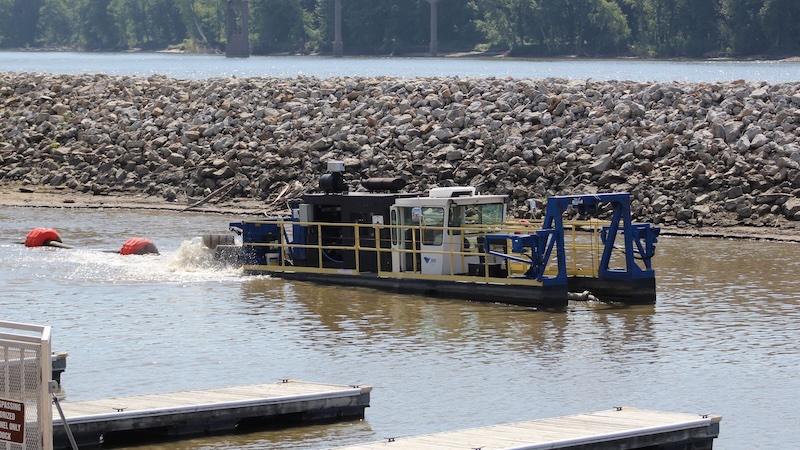
Boaters using the Muscatine Municipal Harbor this summer should see improved navigation as the City of Muscatine has resumed dredging operations following the completion of a major infrastructure project.
The city recently finished relocating its Confined Disposal Facility (CDF), allowing crews to remove sediment that naturally builds up in the harbor from the Mississippi River. The dredging project restores safe water depths and marks the first time dredged material will be transported to the city’s new permanent disposal site near Cypress Street instead of the former Hawkeye Lumber property.
“This new CDF gives us a modern, reliable, and environmentally responsible way to manage dredge material,” said Water Pollution Control Plant Director Scott Swift. “It’s a long-term solution that supports safe harbor access and ensures we can keep Muscatine’s riverfront functioning the way our residents and boaters expect.”
A Long-Term Investment
The relocation project has been several years in the making. In November 2025, the Muscatine City Council approved a $571,516 contract with Heuer Construction to complete the final phase of the project.
The improvements included:
- A new force main along Mad Creek to the Cypress Street disposal site
- New confinement berms and storm sewer improvements
- A relocated dewatering area for dredged material
- A short extension of the pedestrian trail
The project was completed in June, allowing dredging operations to begin this summer using the new facility.
City Administrator Matt Mardesen said the project benefits more than just harbor maintenance.
“Relocating the CDF isn’t just about improving dredging operations—it’s about creating new opportunities for the former Hawkeye site while strengthening Muscatine’s riverfront,” Mardesen said.
Why Dredging Is Important
Sediment constantly washes into the harbor from the Mississippi River, gradually making it more difficult for recreational boats, fishing boats, and visiting boaters to safely enter and leave the marina.
The city performs dredging on a regular basis to maintain safe navigational depths. High river levels can sometimes delay the work until conditions are safe.
During the operation, the city’s dredge removes sediment from the harbor and pumps it through underground pipelines to the new disposal facility. The material is placed into large dewatering bags that allow water to drain while trapping the sediment, which can later be reused as fill material.
Swift said the new facility is designed to hold three large dewatering bags, with two currently in use.
What Boaters Should Know
While dredging is underway, boaters should expect equipment to be operating near the harbor entrance and other areas where sediment has accumulated.
The City encourages boaters to:
- Slow down when traveling near dredging equipment.
- Follow any temporary navigation changes.
- Use caution around active work zones.
The City of Muscatine will provide updates on the project’s progress through its website and social media channels.
The completion of the new disposal facility also opens the former Hawkeye Lumber property for future redevelopment while supporting the City’s long-term vision for the riverfront.
Interim Parks and Recreation Director Nick Gow said maintaining the harbor is essential for both residents and visitors.
“Maintaining safe navigational depths isn’t just routine maintenance—it’s essential to keeping the harbor accessible, welcoming, and enjoyable for everyone who uses it.”
With the new facility now operational, city officials say Muscatine is well positioned to keep the municipal harbor safe and accessible for years to come.