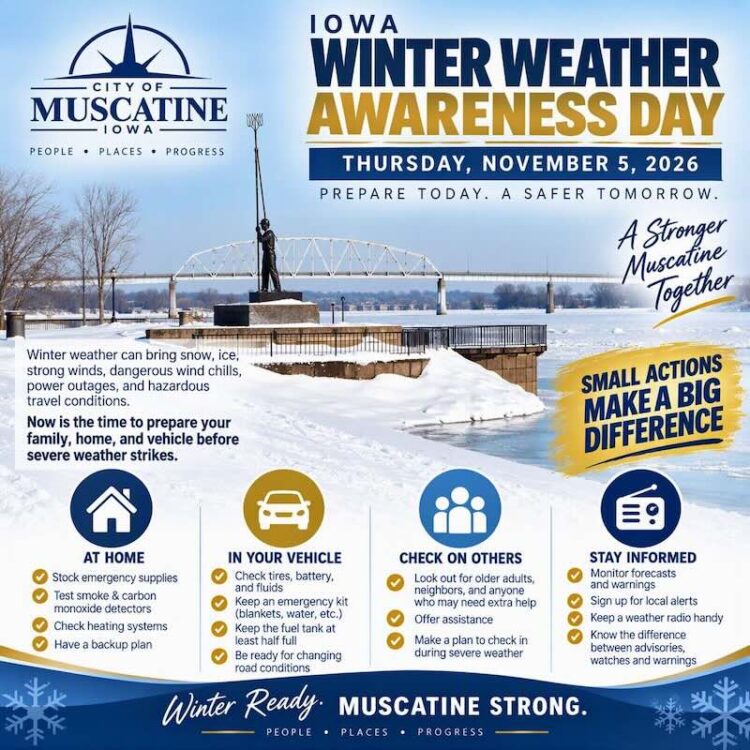





Winter weather can arrive quickly and bring dangerous conditions that threaten lives, disrupt travel, damage property and strain essential services. From snow-packed roads and icy sidewalks to extreme cold and power outages, winter storms can create serious challenges for individuals, families and communities across Iowa.
As colder weather approaches, residents are encouraged to take proactive steps to prepare for the months ahead. Sponsored by the Iowa Department of Homeland Security and Emergency Management in partnership with the National Weather Service, the annual observance highlights the importance of preparing before winter storms arrive.
“Iowa winters can be unpredictable, with conditions changing rapidly from a light snowfall to a dangerous blizzard or ice storm,” said Matt Mardesen, city administrator. “Taking a few simple steps now can help protect your family, reduce risks, and ensure you’re ready when severe winter weather arrives.”
Winter storms can range from short-duration snow events to prolonged storms that affect large portions of the Midwest. Some may disrupt travel for only a few hours, while others can leave roads impassable, knock out power and create hazardous conditions for several days.
Winter Weather Hazards
The most common winter weather threats include:
-
Heavy snowfall
-
Freezing rain and ice accumulation
-
Sleet
-
Strong winds and blowing snow
-
Extreme cold temperatures
-
Dangerous wind chills
These conditions can lead to reduced visibility, hazardous travel, power outages, frozen pipes and an increased risk of injury or death. Motorists stranded in vehicles, residents without heat and individuals exposed to severe cold are particularly vulnerable during winter storms.
Even after a storm ends, lingering impacts such as icy roads, damaged infrastructure and delayed services can create challenges for days or weeks.
Take Steps Now to Prepare
Emergency management officials encourage residents to use Winter Weather Awareness Day as an opportunity to review and update their winter preparedness plans.
At Home
-
Assemble or replenish emergency supplies, including food, water, medications, flashlights, batteries and blankets.
-
Test smoke alarms and carbon monoxide detectors and replace batteries if needed.
-
Inspect furnaces, fireplaces and heating systems to ensure they are operating safely.
-
Insulate pipes and seal drafts around doors and windows.
-
Identify alternative heating and shelter options in the event of a power outage.
In Your Vehicle
-
Prepare a winter emergency kit containing blankets, extra clothing, a flashlight, phone charger, jumper cables, sand or cat litter for traction, snacks, water and a first-aid kit.
-
Check tire tread and tire pressure.
-
Ensure the battery, brakes, windshield wipers and fluids are winter-ready.
-
Keep the fuel tank at least half full during winter months.
Stay Informed
-
Monitor weather forecasts and warnings from trusted sources.
-
Sign up for local emergency alerts when available.
-
Keep a battery-powered weather radio and charged mobile devices available during storm events.
-
Know the difference between winter weather advisories, watches and warnings.
Prepare Together, Stay Safe Together
Winter preparedness is about more than protecting your own household. A resilient community depends on neighbors helping neighbors before, during and after severe weather events.
As temperatures drop and winter storms become more likely, residents are encouraged to check in with older adults, individuals with disabilities, families with young children and anyone who may need extra assistance during extreme weather. Help a neighbor clear a sidewalk, share preparedness information or make a plan to check on one another during a storm.
Every resident can play a role in keeping Muscatine safe this winter. By preparing now, staying informed and looking out for those around us, the community can reduce risks and ensure no one faces winter weather challenges alone.
Winter Weather Terms to Know
-
Snow Squall: A brief but intense burst of heavy snow accompanied by gusty winds that can rapidly reduce visibility to near zero and create dangerous travel conditions.
-
Blizzard: Sustained winds or frequent gusts of at least 35 mph combined with falling or blowing snow that reduces visibility to one-quarter mile or less for at least three hours.
-
Freezing Rain: Rain that freezes upon contact with surfaces at or below 32 degrees, creating a glaze of ice on roads, sidewalks, trees and power lines.
-
Sleet: Small ice pellets that form when melted snow refreezes before reaching the ground, often resulting in hazardous driving and walking conditions.
-
Wind Chill: The temperature the body feels when air temperature and wind are combined. Dangerous wind chills can lead to frostbite and hypothermia in a matter of minutes.
-
Hypothermia: A dangerous condition that occurs when the body’s temperature drops below normal because of prolonged exposure to cold temperatures.
-
Frostbite: An injury caused by freezing skin and underlying tissue, most commonly affecting fingers, toes, ears and the nose.
Learn More About Winter Safety
Additional winter weather preparedness information is available through the following resources:
-
Winter Weather Safety – National Weather Service
-
Winter Weather Safety Preparedness – National Weather Service
-
Cold Hazard Simplification – National Weather Service
-
Winter Weather: Before, During and After – Centers for Disease Control and Prevention
-
Cold Weather Safety for Older Adults – National Institute on Aging
Winter Weather Awareness Day (Nov. 5) serves as an important reminder that winter safety starts long before the first major storm. Residents are encouraged to review emergency plans, update emergency kits, prepare vehicles and homes, and help others do the same. Working together as a prepared and connected community, Muscatine can be ready for whatever winter brings.