



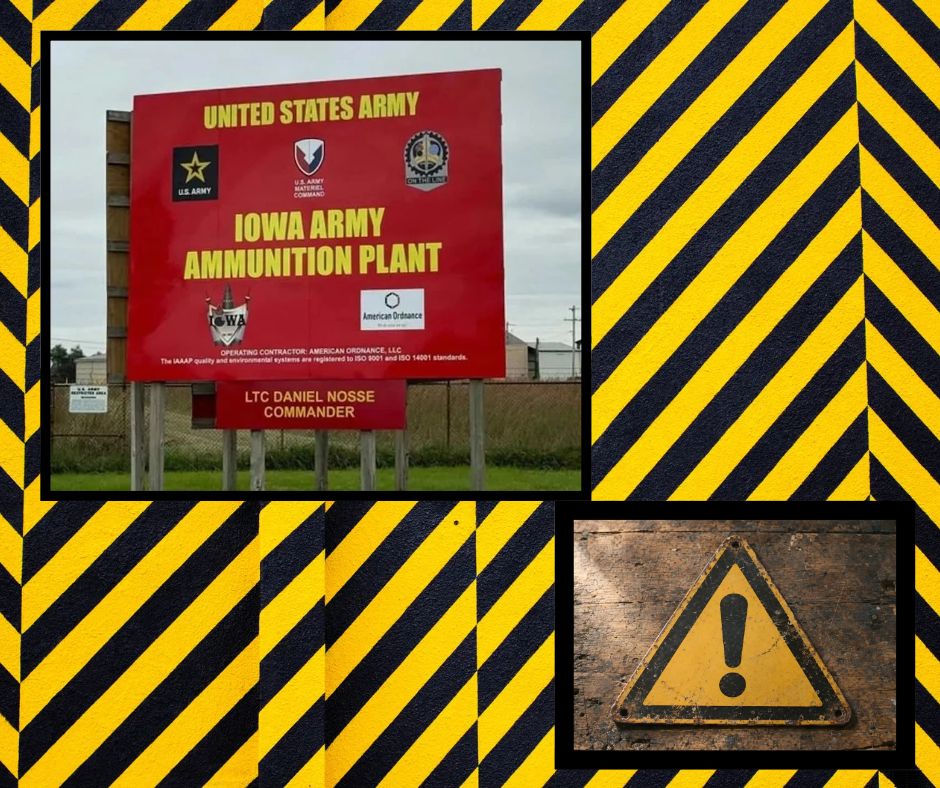
The planned controlled detonation of hazardous lead azide at the Iowa Army Ammunition Plant in Middletown has been rescheduled for Wednesday, November 25, as the Army works to ensure favorable weather conditions and complete necessary safety measures.
In an update posted to its official social media account, the Army said the new date will allow for “optimal weather conditions and all mitigation measures to be emplaced.”
The controlled detonation at Iowa Army Ammunition Plant is now scheduled on Wednesday, November 25, 2026 to allow for optimal weather conditions and all mitigation measures to be emplaced.
The Army and our interagency partners have been working around the clock to safeguard all Americans in the region.
Additional details on this situation will be forthcoming.
The health and safety of all Americans has and always will be our first priority.
— U.S. Army (@USArmy) November 23, 2026
The Army also said it and its interagency partners have been working around the clock to safeguard residents in the region.
The detonation involves degraded lead azide, a highly sensitive explosive material stored at the installation. The Army plans to conduct two controlled detonations to dispose of the material, which has become unstable and presents a potential risk of accidental explosion.
The operation is expected to produce a dust plume containing lead particles that could travel beyond the installation and settle on surrounding surfaces.
The Iowa Department of Health and Human Services says it is coordinating with state agencies and federal partners to assess potential public health concerns and support local communities. The U.S. Environmental Protection Agency has issued an emergency permit authorizing the operation.
Potential Health Concerns
According to Iowa HHS, the primary concerns involve breathing airborne lead particles following the detonation or coming into contact with lead dust deposited on soil, playgrounds, vehicles, buildings and other surfaces.
Lead is a toxic metal that can cause serious health effects. Officials emphasize that no safe level of lead exposure has been identified. Young children, particularly those younger than six, and pregnant women are considered especially vulnerable.
The Army has released maps showing modeled projections of potential airborne lead exposure and areas where lead dust could settle. Officials stress that these maps are projections, not confirmed measurements, and could change depending on weather conditions.
The Army plans to update its maps six hours before the detonation and hourly until the operation takes place. Additional updates, including a final estimate of the impacted area, are expected following the event. The Army will also announce when the airborne exposure period has ended.
Precautions for Residents
Iowa HHS recommends several precautions for people in potentially affected areas:
- Stay indoors and keep windows and doors closed for 24 to 48 hours following the detonation, unless updated official guidance indicates otherwise.
- Keep residential heating and cooling systems operating on indoor air recirculation when possible.
- Consider using a portable air cleaner equipped with a HEPA filter.
- Avoid potentially affected areas when possible and use vehicle air recirculation when driving through impacted areas.
- Once the airborne exposure period has ended, wet-clean potentially affected surfaces, including playground equipment, toys and windowsills, with soap and water. Avoid dry sweeping, which can redistribute dust.
- Consider washing vehicles and replacing cabin air filters if needed.
- Wash hands before eating or drinking and remove shoes before entering homes to limit tracking dust indoors.
Schools, commercial buildings and other facilities with outside air intakes should consider temporarily switching to recirculation when it is safe to do so.
Blood Lead Testing
Health officials say lead exposure may not cause immediate symptoms. Blood lead testing is the only recommended method for evaluating potential exposure.
Anyone concerned about possible exposure should contact a health care provider to discuss whether testing is appropriate. Health care providers can help determine the need for testing and any follow-up based on an individual’s exposure history.
Iowa HHS says additional information regarding the detonation, potential exposure areas and recommended precautions may change. Residents are encouraged to follow the latest Army notifications and guidance from state and local health officials.
Updates, maps and additional information are available through the U.S. Army’s Installation Community Notifications website and Iowa HHS’s lead exposure resources.