




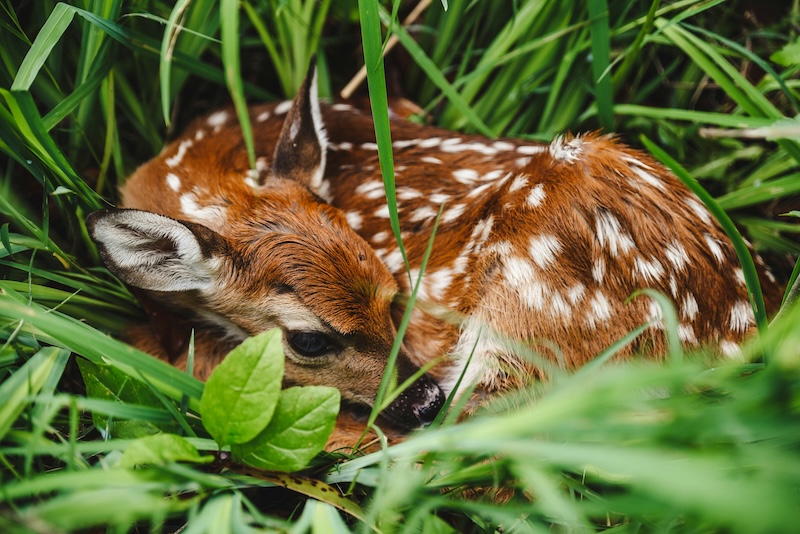
As spring settles in, wildlife across the region is entering one of its most active and delicate times of year—baby season. From young deer to tiny rabbits and newly hatched birds, forests, parks, and even backyards are filling with new life.
Wildlife experts at the Scott County Conservation office are reminding the public that while it may be tempting to step in and help, the best thing people can do in most cases is nothing at all.
Deer
White-tailed deer, for example, give birth to fawns and then intentionally leave them hidden and alone for hours at a time. This strategy helps protect the young from predators. If you come across a solitary fawn, it is likely not abandoned. The mother is nearby and will return to nurse and care for it. Intervening can do more harm than good.
Rabbits
The same hands-off approach applies to rabbits. Baby rabbits live in shallow nests called warrens, often hidden in yards or grassy areas. Mother rabbits are extremely sensitive to disturbances and may abandon a nest if it is disrupted. If a nest is discovered in a yard, residents are encouraged to avoid it. If mowing is necessary, placing a protective barrier like an upside-down milk crate over the nest can help prevent accidental harm. Pet owners should also keep dogs away from these areas.
Birds
Birds present a slightly different situation. If a baby bird falls from its nest and is uninjured and the nest is within reach, gently placing it back is appropriate. However, if the bird has feathers and has been on the ground for some time, it may be a fledgling learning to fly. In these cases, leaving it alone is best, as parent birds are typically nearby and continuing to care for it.
Conservation officials emphasize that many young animals that appear abandoned are actually under close watch by their parents. Human interference, even with good intentions, can disrupt this natural process.
As outdoor activity increases with warmer weather, residents are encouraged to stay aware, keep a respectful distance from wildlife, and remember: when it comes to baby animals, the safest help is often no help at all.


